Old USD banknotes: How I collect in Warsaw Millennium Bank and Can Not Exchange in Asia
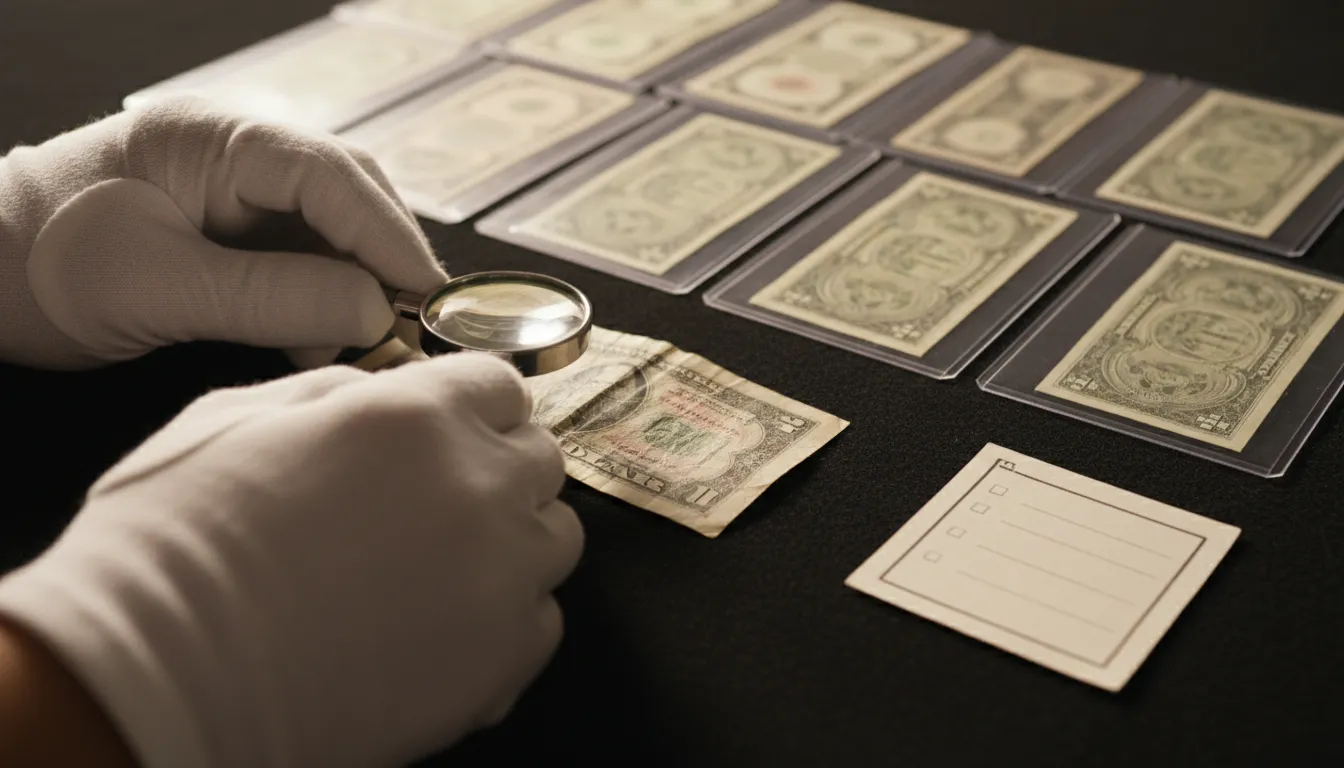
If you are searching for old USD banknotes, you are probably trying to answer two questions at once: Which notes are worth saving, and how do I avoid getting misled by hype? This guide is built for collectors who want a clear method, practical grading advice, and realistic expectations about value, rarity, and security features.
I collect what I like, but I also check what matters. With US paper money, small differences in series, print details, and condition can matter more than “cool serial numbers.” I use a consistent workflow so the collection grows with purpose.
Table of Contents
- 🧾 What counts as old USD banknotes and why the terminology matters
- 🕰️ Introduction of banknotes: how modern US paper money developed
- 🖼️ Design and Features: Portraits and symbols, artistic elements, and what collectors notice
- 🛡️ Security features and watermarks: the fastest way to protect your collection
- 📌 Collecting Banknotes: Popular series and rarities (what to prioritize)
- ⭐ Rare and valuable notes: what usually moves the market
- 💰 Value and Rarity: Factors affecting value (how I decide if I should keep, research, or pass)
- 📏 Grading and condition: the difference between “collectible” and “expensive”
- 🧰 Collecting workflow: how I sort, verify, and price old USD banknotes
- 🧾 Pricing guides: how I use them without getting fooled
- 🧠 Notable Series and Issues: Famous errors and misprints, commemorative editions, and special formats
- 🧷 Buying and selling markets: where old USD banknotes trade and how to avoid common mistakes
- 🌍 Legal and Cultural Aspects: legal tender status, cultural depictions and influence
- 🧯 Counterfeiting issues: how to reduce risk
- 🧼 Preservation and Care: proper storage methods, display, and presentation ideas
- 🧷 Notable examples of what collectors look for (without assuming automatic value)
- 📚 Old USD banknotes FAQ
- 🧭 Takeaway: my simple system for smarter collecting old USD banknotes
- 🌐 Bonus: international context (European Bank, Asian Money Exchange)
- Quick caution for collectors buying across regions
🧾 What counts as old USD banknotes and why the terminology matters
Old USD banknotes generally means older Federal Reserve Notes or earlier US paper money types that are no longer common in everyday circulation. In the US context, collectors often include:
- Federal Reserve Notes (current era US paper money)
- Silver Certificates (older redeemable notes, now collectible)
- United States Notes (rare in modern circulation)
- Treasury/Series-specific issues from earlier decades
- Commemorative or special-purpose issues (depending on what you define as “old”)
To me, “old” also means historical significance: design era, production changes, and security development over time. Those are the anchors for smart collecting.
🕰️ Introduction of banknotes: how modern US paper money developed
People collect US paper money because it is a tangible record of Design changes over time. The US moved through multiple eras of banknote design and security. When you understand the timeline, you can spot patterns that help you identify better candidates.
Key things that changed as US banknotes evolved:
- Portraits and symbols (front and back iconography)
- Typography and layout (more compact or redesigned compositions)
- Security features (watermarks, security threads, inks, and machine-readable elements)
- Printing technology (including changes in how plates and paper were handled)
This matters because a “rare-looking” note is not always valuable. But a historically significant note from a transitional period often is.
🖼️ Design and Features: Portraits and symbols, artistic elements, and what collectors notice
When I first start sorting, I look at the note as a design object. Collectors often care about:
- Portraits: who appears and whether the note belongs to a specific design series
- Symbols: emblems, seal placement, and design motifs
- Artistic elements: engraving style, borders, and ornamental details
- Back-of-note layout: iconography and framework changes across series
Even before I check any “serial number traits,” I confirm the note’s series and the design era. That usually tells me whether I should spend time on deeper research.
🛡️ Security features and watermarks: the fastest way to protect your collection
For any collector, security is not optional. Counterfeit risk increases when demand rises, and collectible segments are often targeted. So, I always treat security features and watermarks as a primary verification step.
What I check (high-level)
- Watermarks: visible when held to light (note that exact appearance depends on series)
- Security threads or embedded elements: presence and placement vary by era
- Ink and print sharpness: counterfeits often blur linework or misplace details
- Microprinting and security patterns: where present
- Consistency across faces: seals, numerals, and alignment should match known designs
If a note fails basic security checks, I do not move forward with “value chasing.” The best investment is time spent avoiding counterfeit mistakes.
📌 Collecting Banknotes: Popular series and rarities (what to prioritize)
Collectors differ, but there are common priorities for old USD banknotes hunting. I try to rank my effort like this:
- Series and key types (older types, transitional series, and known collectible issues)
- Star notes and print-run differences
- Error notes and misprints (when genuine and identifiable)
- Low-population serial number patterns (only after verifying the note itself)
- Condition (grading can change the price dramatically)
Series and rarities: how I think about “what is worth hunting”
I ask a simple question: Is this note rare because of production, or is it only rare because it looks unusual? Production-driven rarity (certain star notes, short print runs, and recognized special issues) is often more reliable than purely decorative appeal.
⭐ Rare and valuable notes: what usually moves the market
In US paper money collecting, “rare” typically comes from one of these buckets:
- Short print runs or replacement runs
- Star notes used as replacements for paper or cutting problems
- Errors and misprints (ink transfer, alignment issues, printing anomalies)
- Discontinuation and replacement of designs or note types
- Unusual serial-number structures that are genuinely scarce
One misconception I see often: collectors assume any “cool serial number” automatically has value. In practice, Value and Rarity: Factors affecting value depend on multiple signals, not one feature.
💰 Value and Rarity: Factors affecting value (how I decide if I should keep, research, or pass)
To understand value, I look at these factors in order:
1) Note type and series
A newer common note with an unusual serial pattern may still be face value. An older or special note type with normal serials can be more collectible.
2) Print/run rarity and replacement status
Star notes and recognized special issues often carry a premium, especially when they come from shorter replacement ranges.
3) Condition and grading
Condition is a major driver. Two notes with the same serial traits can sell for very different amounts if one is crisp and the other is worn.
4) Demand from collectors
Some categories are popular. Others are niche. Pricing follows the buyer side.
5) Authenticity and counterfeiting risk
The more a category is targeted by fakes, the more careful you must be. That caution affects value too, because buyers discount suspicious notes.
📏 Grading and condition: the difference between “collectible” and “expensive”
If I had to pick one skill that improves results fast, it is learning grading fundamentals. The market pays for clean eye appeal.
What I check before I look up pricing
- Creases (major impact)
- Edge wear and fraying
- Corner rounding
- Folds and whether they are hard or light
- Centering (ink and design alignment)
- Discoloration (staining and toning)
- Paper softness (may indicate heavy wear or handling)
I also avoid cleaning. Cleaning and maintenance advice on paper money is tricky because “improvements” can destroy value. If a note needs cleaning, I focus on safe handling and proper storage instead.
🧰 Collecting workflow: how I sort, verify, and price old USD banknotes
Here is my practical checklist. It is designed to be repeatable, not complicated.
-
Separate by age/type
First sort by series and basic note category. If you are not sure, use a reference guide or a reputable database.
-
Confirm authenticity basics
Check security features, print sharpness, and overall consistency. If anything is off, stop.
-
Identify special production features
Check for replacement indicators like star markers (where applicable for the era) and recognized special issues.
-
Check for known “at-a-glance” rarities
Focus on categories that match recognized collectible traits: print/run anomalies, errors, and established serial patterns.
-
Grade conservatively
Use a clear grade range. If you are unsure, downgrade your expectations and continue researching.
-
Price using completed sales
Use a pricing guide, but confirm with recent completed transactions when possible. This reduces overpaying based on asking prices.
-
Document and store
Take photos, note the series and grade estimate, and store properly to preserve condition.
🧾 Pricing guides: how I use them without getting fooled
Pricing guides are helpful, but they are only a starting point. I use these rules:
- Match the series and exact issue, not just the denomination.
- Confirm the condition range before using a value estimate.
- Be cautious with “coolness indexes” or automated rankings. A serial trait may not translate into strong demand.
- Look for recent comps for the same category.
If I only use one source, I prefer a combination: a reputable reference plus real-world market data.
🧠 Notable Series and Issues: Famous errors and misprints, commemorative editions, and special formats
When I search for old USD banknotes, I pay attention to categories with known collector interest.
Famous errors and misprints
Errors can include misfeeds, ink transfer, incomplete printing, alignment anomalies, or other production issues. In practice, I treat errors like this:
- Verify what you have (many “odd” notes are circulation wear, not true printing errors)
- Compare to known error types using reputable references
- Grade based on eye appeal because damage can reduce value
Commemorative editions and design anomalies
Some special editions are created for commemorations or specific contexts. Their value often depends on:
- Scarcity
- Collector demand
- Condition
- Accuracy of identification
Discontinuation and replacement
Collectors often hunt notes that are discontinued or replaced. When a design changes, the older style becomes more limited over time.
🧷 Buying and selling markets: where old USD banknotes trade and how to avoid common mistakes
To buy and sell safely, I focus on liquidity and verification. Typical markets include:
- Online marketplaces where listings and completed sales are visible
- Currency dealers (often better for authentication)
- Coin and paper money shows (more direct negotiation)
- Collector forums and local groups (good for learning, but verify everything)
Common mistakes I avoid:
- Overpaying due to a “rare-sounding” serial number without verifying print/run rarity
- Buying without clear photos of the security features and both sides
- Assuming “face value” means “not collectible” for older types
- Ignoring condition and focusing only on design quirks
🌍 Legal and Cultural Aspects: legal tender status, cultural depictions and influence
Understanding Legal and Cultural Aspects: Legal tender status helps you avoid surprises.
- Many collectible notes remain legal tender in the US, but their market value as collectibles can far exceed face value.
- Sometimes older notes are no longer redeemable in the original way they were intended, but they can still be collectible.
There is also a cultural layer. US banknotes depict historical figures and symbols that reflect national history. That cultural depictions and influence can drive demand among certain collectors and researchers.
🧯 Counterfeiting issues: how to reduce risk
Counterfeiting risk changes by note category. The best mitigation is a disciplined approach:
- Verify security features for the era
- Use reputable references for identification
- Buy with clear return policies when possible
- Be suspicious of unusually “perfect” notes at bargain prices, especially in high-demand categories
If the seller cannot provide clear images and identification details, that is a red flag.
🧼 Preservation and Care: proper storage methods, display, and presentation ideas
Preservation protects value. I store and handle banknotes like I am preserving a document, not just cash.
Proper storage methods
- Use archival holders suitable for paper collectibles
- Avoid PVC and unknown plastics that can interact with paper
- Keep notes dry and stable in temperature
- Store away from direct light to reduce fading and discoloration
- Use sleeves or inserts that do not stick or transfer material
Cleaning and maintenance
I do not recommend cleaning for collectible notes. If you are dealing with dirt or surface issues, better options are:
- Careful handling with clean hands or gloves (as appropriate)
- Professional conservation or professional grading if needed
- Improving storage conditions rather than altering the note
Display and presentation ideas
Display is about balancing access and protection:
- Use archival display frames
- Prefer UV-protective glazing
- Document notes with photos for your records
🧷 Notable examples of what collectors look for (without assuming automatic value)
Serial-number “traits” can be fun, and some traits have established collector interest. Still, I treat them as one data point, not a guarantee of value.
Popular serial traits collectors often research
- Star notes and replacement-run indicators
- Repetitions and repeating blocks
- Ascending or patterned serials
- Mirror-like or symmetric numbers (where applicable)
- Low-digit patterns that may be scarce
My rule: confirm the note’s series and condition first. Then research any serial traits you identify. If a serial trait is supported by known rarity and market demand, then the premium is more realistic.
📚 Old USD banknotes FAQ
What are the most collectible old USD banknotes?
The most collectible tend to be specific older series, certain replacement issues like star notes from shorter runs, recognized special print formats, and genuine error notes. Condition and authentication usually matter as much as the note type.
Do unusual serial numbers always increase value?
No. Many serial patterns are primarily “interesting,” not scarce in the way collectors demand. Value is driven by confirmed rarity and market demand, plus condition and authenticity.
How do I grade old USD banknotes if I am new?
Start with eye basics: creases, folds, corners, edge wear, centering, and discoloration. Compare your estimate to reputable grading references. If uncertain, use a conservative grade range and focus on condition improvements for preservation.
Where can I find pricing guides and real comps?
Use established pricing references for baseline values, then confirm with recent completed sales for the same exact series and condition. Asking prices are not the same as realized prices.
How do I avoid counterfeits when buying old USD banknotes?
Verify security features and watermark appearance for the note’s era, buy from reputable sellers, request clear photos of both sides and security elements, and use transactions with return protection when possible.
Should I clean old banknotes?
Generally no. Cleaning can damage paper and reduce collectible value. Instead, focus on safe storage, gentle handling, and professional help if conservation is needed.
What is the safest way to store and display banknotes?
Use archival sleeves or holders, avoid direct light, maintain stable humidity and temperature, and use UV-protective framing if displaying. Document notes with photos for your records.
Does legal tender status affect collectible value?
Legal tender status usually does not reduce market value. Collectible pricing is driven by scarcity and demand. However, redemption rules from older eras can differ from current “cash” expectations.
🧭 Takeaway: my simple system for smarter collecting old USD banknotes
I collect old USD banknotes for history, design, and the thrill of finding something scarce. But I do not rely on hype. My system is:
- Identify series and type first (historical significance beats “cool” alone)
- Verify security features and authenticity
- Grade by condition (creases and wear dominate value)
- Research rarity drivers like replacement runs, errors, and recognized issues
- Use pricing guides plus completed comps
- Preserve with archival storage so the note stays worth what I paid for it
If I follow that flow, I spend less time guessing and more time building a collection that is both personally enjoyable and grounded in market reality.
🌐 Bonus: international context (European Bank, Asian Money Exchange)
Collectors sometimes encounter old USD banknotes during travel, or they trade across regions. When dealing internationally, it helps to remember:
- European Bank and Asian Money Exchange services may handle cash conversions differently than collectors expect.
- When swapping currencies, paper money age and design may affect willingness to exchange at face value versus collectible value.
- Always verify local regulations and handling rules for paper money and collectible items before shipping or trading internationally.
Quick caution for collectors buying across regions
When you’re dealing with sellers internationally, it helps to remember that scams don’t only target “money”—they target accounts, messaging, and logistics. Before you pay, verify identities independently, and don’t rely on screenshots or pressured “urgent” communication. If you’ve ever wondered whether your digital accounts could be compromised while you’re shopping or trading, this checklist may help: Stop messages.
For additional protection while you travel or manage account access on the go, also review tips for securing mobile services such as porting. Many “too-good-to-be-true” offers become worse once an attacker can intercept calls or resets. Start with porting scams and apply the same “verify everything” mindset to banknote purchases and shipping arrangements.


Comments
Post a Comment