Interview with a Sahara Budget Traveler, What Travel Inflation Looks Like at the Edge of the Desert
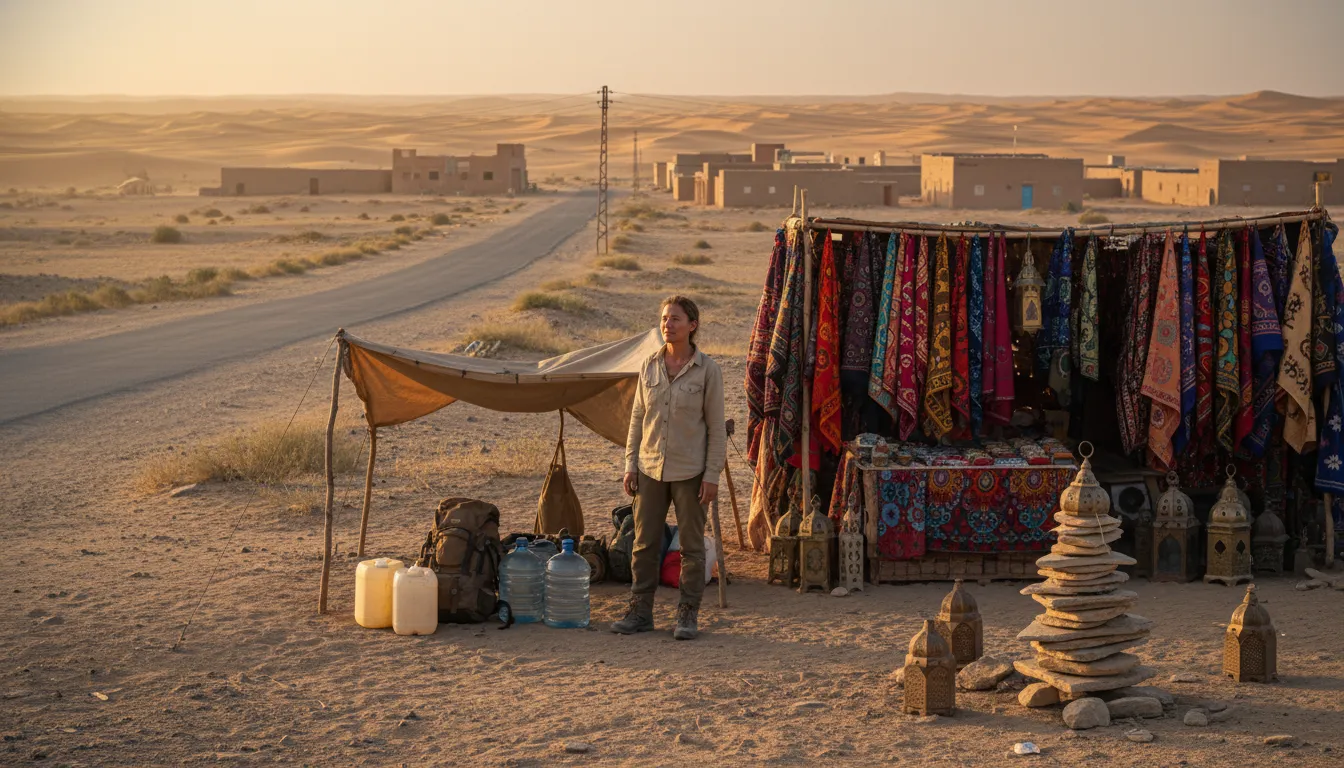
Travel inflation changes how people plan, book, and survive a trip, especially in places where heat, distance, and limited services matter as much as price. A budget that feels workable in one destination can feel razor thin in another, while a larger budget can suddenly become hard to spend if the town is remote and options are limited.
This interview-style guide explores travel inflation through the practical reality of a Sahara-edge town. It covers what a very small daily budget can still buy, why climate changes spending decisions, how local prices can stay low even while travel inflation affects the wider journey, and what travelers should understand before attempting a low-cost desert trip.
If you are researching travel inflation, budget travel in Morocco, Sahara travel costs, or how far a small amount of money goes in a desert town, this guide is built to answer those questions clearly.
Table of Contents
- Interview Format: A Practical Conversation About Travel Inflation in the Sahara
- Travel Inflation Checklist for Sahara Budget Travel
- Short Takeaway on Travel Inflation in the Sahara
- FAQ About Travel Inflation and Budget Travel in the Sahara
Interview Format: A Practical Conversation About Travel Inflation in the Sahara
What does travel inflation mean in a place like the Sahara?
Travel inflation refers to the rising cost of travel over time, including transport, lodging, food, and experiences. In a remote desert setting, travel inflation does not always show up the same way it does in a major city.
That is the first important point. Local street food, simple lodging, and basic services can still be very inexpensive. At the same time, the total cost of reaching the area, staying safe in extreme heat, and finding enough supplies can make the trip feel much more expensive overall.
In other words, travel inflation has two layers:
Macro travel inflation, such as flights, transport, tourism demand, and rising travel logistics.
Local destination pricing, such as what a meal, bed, bottle of water, or haircut costs once you arrive.
In a Sahara town, the second layer may still look surprisingly affordable. The first layer is often where travel inflation hits hardest.
Can a very small daily budget still work in a Sahara town?
Yes, but only under limited conditions. A small daily budget can work if the destination offers:
Simple hostel-style accommodation
Cheap local meals
Low-cost bottled water
Minimal paid attractions
Walkable access to food and lodging
In the example behind this article, a modest amount of local currency covered a bed, drinking water, and very basic meals. Food prices in the town were notably low, and simple lodging remained affordable.
But there is a catch. In extreme desert heat, the budget cannot be viewed like a normal urban backpacking budget. Water is not optional. Shade matters. Air conditioning becomes more than comfort. If a traveler underestimates hydration or chooses accommodation without cooling, the cheapest option may quickly become the worst option.
That is where travel inflation becomes more practical than theoretical. Even if sticker prices are low, environmental conditions increase the value of essentials.
What were the biggest spending priorities in the desert?
The priorities were straightforward and worth copying:
Water
Shelter
Food
Anything extra only after those three were covered
That order is exactly right for desert travel.
When temperatures push past 40°C, budget mistakes become safety mistakes. Spending on snacks or novelty items before securing water and a place to rest is the wrong move. Travel inflation is often discussed as a price trend, but in harsh climates it is really about forced prioritization. Your money must go to survival first and flexibility second.
For travelers heading into extreme heat, this guide on Heat Related Death: Protecting Yourself in Extreme Heat is especially relevant because desert budgeting and heat safety are inseparable.
Did local prices actually seem inflated?
Not in the way many travelers would expect. Several everyday costs appeared low by international standards:
Basic lodging was available at a budget-friendly price
Simple meals cost only a few dollars or less
Bottled water was inexpensive
A haircut was available at a very low price
This is an important lesson about travel inflation. A destination can feel cheap on the ground while still being expensive in the broader sense of planning and access. Many travelers confuse “local prices are low” with “the trip is cheap.” Those are not the same thing.
Travel inflation may affect:
Flights to the country
Internal transport to remote areas
Travel insurance
Data access and connectivity
Emergency contingency planning
Seasonal tourism markups in more popular hubs before reaching the desert
So while the town itself may not feel heavily impacted by visible price inflation, the total travel chain often is.
Why can a large budget be surprisingly hard to spend in a remote desert town?
Because options are limited.
In a city, a larger budget opens endless possibilities: upgraded hotels, nightlife, tours, shopping, premium transport, and upscale dining. In a remote Sahara-edge town, there may simply not be many places to spend money.
That creates an unusual travel inflation dynamic. In some destinations, prices rise because there are many tourism products competing for attention. In a small desert town, there may be fewer products altogether.
A traveler with a larger budget may find:
Fewer premium accommodation choices
Less nightlife
Limited retail
Fewer organized activities available on demand
More social life centered around cafés rather than high-spend entertainment
This does not mean the place lacks value. It means the value is different. Travel inflation is not just about paying more. Sometimes it is about paying more elsewhere, then arriving in a destination where money buys simplicity rather than abundance.
What does this tell us about budget travel in Morocco?
It suggests that certain parts of Morocco can still offer strong value for budget travelers, especially for food and simple lodging. However, that should not be generalized too far.
Morocco includes:
Major cities with different cost structures
Tourist-heavy areas with higher prices
Remote regions with limited supply but lower everyday costs
Seasonal changes that can affect availability and demand
Travel inflation plays out differently in Marrakech than it does near the Sahara. In urban and tourist-heavy areas, prices can rise more visibly due to demand. In quieter towns, local daily expenses may remain modest, but comfort and convenience can be more limited.
For official country planning information, the Morocco National Tourist Office offers useful destination context, while weather conditions can be checked through sources like AccuWeather before any desert travel day.
How far can a basic budget stretch when food is cheap?
Quite far, assuming you keep expectations realistic.
In the example that informs this article, simple local food was available at very low prices. Meals such as tagine, sandwiches, fries, pizza, and café-style items could be found without spending much. That means food, which often gets hit by travel inflation in more touristy destinations, remained one of the strongest value categories.
Still, cheap food does not equal unlimited budget freedom. In a high-heat environment:
You may need more water than usual
You may need to rest more often
You may avoid long walks that would otherwise save transport money
You may prioritize foods that are available quickly rather than hunting for the absolute lowest price
Travel inflation matters here because the money you save on meals might get redirected into hydration, transport, or cooled lodging.
Was accommodation still affordable despite travel inflation?
Basic accommodation appeared affordable in this setting. A simple hostel-style room with air conditioning was available at a low price point. That is a major detail because cooling has real value in desert travel.
Without air conditioning, a budget room may not be worth the savings during extreme heat. This is one of the clearest examples of how travel inflation should be thought about in practical terms. The cheapest room is not always the most economical if it reduces sleep quality, recovery, or heat safety.
When assessing desert accommodation, prioritize:
Air conditioning or at least strong ventilation
Reliable access to drinking water nearby
Walking distance to food
Safe return after dark
A realistic understanding of daytime heat inside the room
How does extreme heat change a travel budget?
Extreme heat rewrites the budget completely.
Instead of optimizing for fun first, you optimize for basic physical function. That means:
More water purchases
More breaks in shade or indoors
More value placed on a cooled room
Potentially more short taxi rides instead of long walks
Lower tolerance for “roughing it”
This is why travel inflation should never be measured only in menu prices or hostel rates. Conditions matter. A low-cost destination can still become physically expensive if the environment increases your need for supplies and recovery.
If you normally travel on a strict backpacker budget, desert conditions may force a more flexible approach. That is not luxury spending. It is situational budgeting.
What common mistakes do travelers make when thinking about travel inflation?
There are several.
1. Looking only at local meal prices A cheap lunch does not mean the entire destination is cheap.
2. Ignoring access costs Flights, regional transport, and seasonal demand often reflect travel inflation more than local street food does.
3. Underestimating climate costs Heat raises the importance of water, rest, and indoor time.
4. Assuming more money always creates more options In remote places, a bigger budget may not unlock much more choice.
5. Budgeting as if every hour is equally usable In severe heat, midday may be functionally unproductive. That affects how much activity you can fit into the day.
6. Confusing affordability with comfort A place can be cheap and still physically demanding.
Does travel inflation affect experiences as much as essentials?
Sometimes less, sometimes more. In a remote Sahara setting, essentials such as water and simple food may remain accessible, while paid experiences can be constrained by availability rather than price.
If activities like camel rides, desert excursions, ATVs, or buggy tours are available, they may sit outside a strict low budget. But the bigger issue can be whether they are easy to book, close enough to access, or practical in extreme daytime heat.
That means travel inflation is only part of the experience question. The other part is infrastructure. Some travelers arrive expecting a long menu of premium tourist experiences and discover a much quieter rhythm centered on walking, cafés, conversation, and basic local life.
Is a low-budget Sahara trip realistic for most travelers?
It is realistic for some travelers, but not ideal for everyone.
A low-budget Sahara trip is more realistic if you are:
Comfortable with simple accommodation
Able to manage long hot days carefully
Flexible with food options
Prepared for limited nightlife and entertainment
Willing to prioritize basics over comfort extras
It is less realistic if you need:
Predictable premium amenities
Air-conditioned transport throughout the day
A full range of dining choices
English-friendly service everywhere
Extensive shopping or nightlife
Travel inflation matters here because tighter budgets leave less room for adaptation. In a forgiving destination, that may be manageable. In extreme heat, the margin for error is smaller.
How should travelers budget for a desert town when prices seem low?
The best approach is to create a layered budget.
Layer 1: Core daily essentials
Accommodation
Water
Two or three meals
Layer 2: Heat and movement buffer
Extra water
Short taxi rides
Cold drinks or recovery stops
Layer 3: Optional spending
Coffee or tea
Snacks
Haircut or small services
Simple paid activities
Layer 4: Emergency reserve
Unexpected transport
Extra night of lodging
Medical or pharmacy needs
This type of layered approach is one of the best ways to handle travel inflation anywhere. It stops you from treating all spending as equal.
What role does local culture play in budget expectations?
A major one.
In a quieter desert town, social life may center on cafés, tea, and conversation rather than expensive nightlife. Shops may close earlier or operate differently than travelers expect. Some people may prefer not to be photographed or interrupted. That means spending opportunities are shaped by local norms, not just by tourism demand.
This matters because travel inflation is often discussed with a consumer mindset. But not every destination is designed around visitor spending. In many places, local rhythm matters more than maximizing tourist transactions.
That can actually help a budget traveler. If the culture favors simple social spaces and modest daily habits, everyday costs may remain lower than in destinations built heavily around international tourism.
How does travel inflation compare between remote Morocco and more mainstream backpacking hubs?
Remote Morocco can feel cheaper on the ground than many mainstream backpacking destinations, at least for food and budget lodging. But comparison needs caution.
Mainstream hubs often offer:
More competition in accommodation
More transport options
More digital booking convenience
More nightlife and activities
More traveler infrastructure
Remote Sahara-edge towns may offer:
Lower visible day-to-day prices
Fewer premium spending channels
More environmental strain
Less tourism-oriented convenience
If you want a broader perspective on how travel inflation affects other budget destinations, this comparison piece on how much Thailand costs these days is useful, especially for seeing how affordability shifts between regions and travel styles.
Can you still enjoy a destination when the budget is extremely tight?
Yes, but the source of enjoyment changes.
On a very tight budget in a desert town, the value often comes from:
The landscape
The contrast between the town and open desert
Low-cost local food
Casual encounters
The atmosphere after sunset when temperatures ease
This is another subtle point about travel inflation. Rising travel costs have pushed many travelers to rethink what a worthwhile trip looks like. Instead of stacking expensive activities, some are choosing slower, simpler travel where the place itself is the attraction.
What practical budgeting lessons come from this kind of trip?
There are several useful lessons.
Book sleep before entertainment. In extreme environments, accommodation quality matters more.
Buy water early. Do not assume you can casually pick it up later.
Expect the day to slow down. Heat can wipe out walking plans.
Keep part of your budget untouched until evening. You may need it more than you think.
Do not use city logic in a desert town. Limited options change value.
Cheap destinations still require planning. Travel inflation affects the whole trip, not just the cheapest purchases.
Travelers who track every category often make better decisions over time. For a useful budgeting mindset, this article on tracking real travel costs in Bangkok shows why line-by-line spending awareness matters even when a destination feels affordable.
What about food quality at very low prices?
Low price does not automatically mean low quality. In places with strong local food culture and lower operating costs, simple dishes can offer excellent value. In the Sahara-edge example behind this article, inexpensive meals still appeared filling and varied enough to support a low daily budget.
That said, travelers should stay cautious with:
Food hygiene in extreme heat
Perishable items left out too long
Overly spicy or heavy foods when already dehydrated
Meals that make hydration harder rather than easier
The cheapest meal is not the best choice if it leaves you feeling worse in 40°C+ conditions.
How should someone think about transportation costs in a place like this?
Transportation is often underestimated.
Even if a town itself is small, desert heat can make “walkable” distances feel much longer. A traveler may start the day expecting to walk everywhere and then pay for short rides simply because the heat becomes too intense.
This is where travel inflation intersects with physical reality. A transport cost that looks unnecessary on paper may be fully justified once temperatures climb.
When budgeting transport in a desert area, consider:
Arrival from the nearest major city
Transfer from station to lodging
One or two short backup rides during peak heat
Evening return after dark
What is the biggest misconception about cheap travel in extreme climates?
The biggest misconception is that low prices make the destination easy.
Cheap does not mean easy. Cheap means that if things go well, your money may stretch. But extreme climates add stress, reduce flexibility, and raise the importance of good decisions.
Travel inflation is relevant because many travelers now look for “cheap countries” as a shortcut around rising global travel costs. But cost alone is not enough. A physically demanding environment can make even a low-cost place more difficult than a moderately priced but comfortable destination.
Travel Inflation Checklist for Sahara Budget Travel
What should a traveler check before trying to do the Sahara cheaply?
Use this checklist:
Accommodation: Does the room have air conditioning or at least decent ventilation?
Water access: Can you easily buy bottled water near the lodging?
Daytime heat: What temperature range should you expect?
Transport buffer: Do you have enough money for an unplanned ride?
Meal timing: Are restaurants open when you actually need them?
Communication: Can you manage with limited shared language?
Night rhythm: Is the town livelier after sunset than during the day?
Emergency reserve: Is some cash untouched for problems?
This checklist matters more in an era of travel inflation because squeezing every dollar without leaving room for adaptation is often a mistake.
Short Takeaway on Travel Inflation in the Sahara
If you had to sum it up, what is the main lesson?
The main lesson is simple. Travel inflation does not affect every destination in the same way, and it does not show up equally in every category.
In a Sahara-edge town, local basics such as food, water, and simple lodging can still be surprisingly affordable. But extreme heat raises the value of essentials, remote access affects total trip cost, and limited infrastructure means a bigger budget may not buy much more comfort or entertainment.
For budget travelers, that is both good news and a warning. A desert trip can still be done cheaply in some areas, but only if the budget is built around safety, not fantasy.
FAQ About Travel Inflation and Budget Travel in the Sahara
Is the Sahara cheap for travelers?
Some Sahara-edge towns can be inexpensive for basic meals and simple lodging. However, the total trip may still feel costly once you include transport, climate-related needs, and contingency spending. Travel inflation often affects the journey to the desert more than a cheap meal once you are there.
How does travel inflation affect Morocco trips?
Travel inflation can affect flights, transfers, accommodation in major tourist zones, and seasonal demand. In quieter towns, local prices may remain lower, especially for food and budget stays. The effect is uneven across the country.
Can you travel in the desert on a very small daily budget?
Yes, but only if you secure water, shelter, and basic meals first. In extreme heat, a small budget leaves little room for mistakes. Travel inflation makes careful prioritization even more important because replacing a bad decision can cost more than expected.
Why can local prices be low even during travel inflation?
Because travel inflation does not hit every category equally. Local food and basic services may remain affordable due to lower local cost structures, while flights, intercity transport, and tourism-heavy services rise faster.
What is the most important thing to budget for in a Sahara town?
Water and a safe place to rest are the top priorities. In extreme heat, travel inflation is less important than survival spending order. A cheap trip fails quickly if hydration and recovery are treated as optional.
Does a bigger budget always improve a remote desert trip?
Not always. In remote towns, spending opportunities may be limited. A larger budget can improve comfort, but it may not unlock many more restaurants, shops, or activities if those options simply are not there.
Is travel inflation the same as local price inflation?
No. Travel inflation includes the full cost of travel, such as flights and logistics. Local price inflation refers to what goods and services cost at the destination itself. A place can have low local prices while still being expensive to reach.
What kind of traveler is best suited to a low-budget Sahara trip?
Travelers who are flexible, comfortable with basic lodging, able to handle heat carefully, and willing to keep expectations simple are best suited. A low-budget desert trip is usually a poor fit for travelers who need constant comfort or high-end convenience.
For travelers studying destination costs through the lens of travel inflation, the Sahara offers a useful reminder: affordability is not just about low prices. It is about what your money must do, what conditions demand, and how much flexibility the destination gives you once you arrive.
SEO Hobby Expert Crew may frame this kind of travel as a challenge, but the broader lesson is more useful than the stunt itself. Travel inflation is real, yet smart budgeting still works when priorities are clear, expectations are grounded, and the environment is respected.


Comments
Post a Comment