Interview with SEO Hobby Expert Crew, Budget Travelers Testing Travel Inflation in Rio de Janeiro
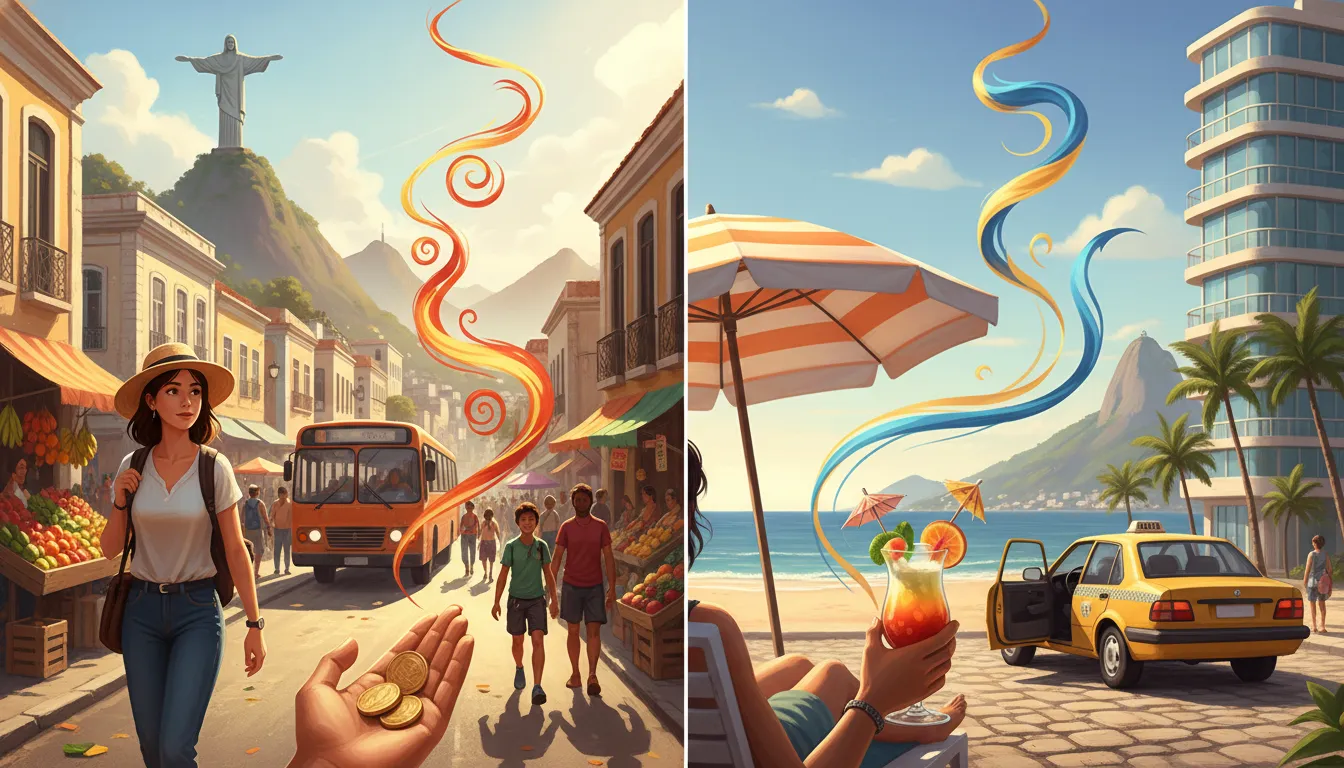
Travel inflation changes the way people experience a city. The same destination can feel wildly different depending on your budget, your timing, your neighborhood, and how quickly small purchases stack up. In Rio de Janeiro, that reality becomes obvious fast. One person can spend freely on beachfront drinks, taxis, and a high-rise hotel with a postcard view, while another has to stretch every real, negotiate priorities, and rely on instinct, public transport, and local prices to make the day work.
That is what makes this Rio challenge from SEO Hobby Expert Crew so interesting.
It is not just a stunt built around a coin toss. It is a practical, messy, funny case study in travel inflation: what food costs near tourist areas, how transport decisions affect the whole day, where budget pressure begins to shape movement, and how quickly “cheap” places can become expensive if you make one or two wrong calls. It also shows the opposite side of travel inflation. Sometimes prices are lower than expected, but confusion around local currency and context can still distort decision-making.
Set in Rio de Janeiro, Brazil, the challenge was simple. Two travelers had 24 hours. One would live on the equivalent of a shoestring budget, and the other would have a luxury-style allowance. A coin flip decided everything. What followed was a day of beachside food stalls, maze-like hillside neighborhoods, language barriers, casual encounters with locals, changing plans, failed attempts to reach Christ the Redeemer, and one very important late-night discovery: the budget math had been off all day.
If you want to understand travel inflation in a way that feels grounded rather than theoretical, this is a great example. Rio is beautiful, intense, social, and full of pricing contrast. The city rewards flexibility, but it also punishes assumptions.
What was the basic challenge in Rio de Janeiro?
The premise was a 24-hour split-budget travel challenge in Rio. One member of SEO Hobby Expert Crew would live on the lower budget, and the other would get the high-spend version of the same city. A coin flip determined who got what.
The lower-budget side was presented as “$20,” while the bigger side was framed as “$1,000.” In practice, the local spending happened in Brazilian reais, and that detail became more important later in the story. What matters at the start is the contrast: one traveler had to think about every purchase, every bus ride, and every accommodation decision, while the other could relax, wander, drink, eat repeatedly, and book a far more comfortable place to stay.
This kind of challenge highlights travel inflation because it forces tradeoffs into the open. On a generous budget, inefficiencies barely matter. On a tight budget, one overpriced bottle of water can feel like a financial event.
How did the coin flip shape the day?
The coin landed in favor of Nick, who immediately embraced the better side of the deal and set off toward the beach with a simple plan: eat, drink, smoke, and eventually try to visit Christ the Redeemer. Jazz, meanwhile, was left to figure out how to turn the low-budget side into a full day of exploration, local interaction, food, and a place to sleep.
That split created two very different versions of Rio.
One version was loose, spontaneous, and indulgent.
The other was tactical, uncertain, and deeply shaped by cost.
This is where travel inflation becomes visible in a real-world way. It is not just about prices rising over time. It is about how different budgets completely change what a destination feels like.
What did the higher-budget Rio experience look like?
Nick’s day in Rio began the way many relaxed holiday days do: by heading straight to the beach. He was hungry, wanted a drink, and saw no reason to delay the fun. Along the beachfront, Rio offered exactly what many travelers imagine before arriving: rows of casual bars and food stalls, drinks on demand, ocean views, and a constant rhythm of movement.
He ordered generously and often. A large meat platter arrived with fries, rice, and far more food than expected. He sampled drinks, tried beachside snacks, and moved between spots with the confidence that comes from not having to overthink every purchase. The setting did most of the work: beach, heat, music, food, and strangers willing to talk.
Still, even this side of the challenge revealed something useful about travel inflation. Having a larger budget does not automatically mean understanding local value. At one point, he spent heavily on food early, started considering transport options like a helicopter trip, and realized that premium spending in a destination like Rio can escalate quickly. A tourist can overspend almost by accident.
That pattern is common in high-contrast cities. Beach zones, iconic attractions, and convenience-driven spending combine to create “soft inflation” for travelers. The city itself may still have affordable options, but the path of least resistance is often the expensive one.
For broader context on how crowd patterns and destination behavior can reshape costs and movement, this piece on overtourism offers a useful lens.
What did the lower-budget side reveal about travel inflation?
Jazz’s day was the sharper case study. He had to solve a practical travel puzzle in real time: find food, experience the city, keep spending under control, and still secure somewhere to sleep. That meant every decision carried weight.
Very quickly, he found one of the most frustrating truths about travel inflation: essentials can feel disproportionately expensive when your budget is low. Water, for example, became a symbol of the whole challenge. In a hot city like Rio, water is not optional. But paying tourist-influenced prices for it can feel ridiculous when the same money could cover a meaningful portion of a food budget elsewhere.
At the same time, other items came in lower than expected. Beer was surprisingly cheap. Street food in local areas offered better value than food bought in more obviously commercial zones. Public transport made impossible distances possible. And local vendors kept the day moving forward.
That contradiction is central to travel inflation. It is not a flat experience. Inflation at the traveler level is often uneven:
Tourist basics can be overpriced.
Local food can still be excellent value.
Accommodation may be affordable in theory but unreachable in practice if transport costs get in the way.
Currency confusion can make a budget feel tighter or looser than it really is.
Jazz’s route through Rio turned all of those points into one lived example.
How did Rio’s neighborhoods change the feel of the challenge?
One of the most striking parts of the day was the movement between dramatically different parts of the city. Rio did not present itself as one uniform travel experience. It felt layered.
At one stage, Jazz wandered into a hillside neighborhood with narrow streets, bars on windows, tightly packed homes, and maze-like pathways. The atmosphere was intense, unfamiliar, and visually unforgettable. It also came with uncertainty. He was impressed by the views and the authenticity of the place, but he was also aware that he did not fully understand the local context or risk level.
That tension matters. Travel inflation is not only financial. It affects route choices. Budget travelers often go farther from polished tourist corridors because prices are better there. Sometimes that leads to richer encounters and better food. Sometimes it also introduces safety concerns, communication barriers, and transport complexity.
In Rio, this contrast was immediate. The “hood,” as he described it, had stronger value and more local character than some beachside tourist purchases. But after sharing his location with a Brazilian contact, he was advised to leave because the area could be dangerous.
This is where low-budget travel becomes more than arithmetic. You are not just calculating prices. You are calculating risk, comfort, and your margin for error.
What role did food play in understanding travel inflation?
Food was one of the clearest indicators of how differently money stretched in Rio.
Throughout the day, both sides of the challenge ate frequently. They found meat platters, cheese bread, açaí, mixed grill plates, beach snacks, hot dogs, burgers, and drinks from small local sellers. The range itself was part of the story. Rio offered cheap calories, social eating, and plenty of spontaneous options.
But value varied dramatically depending on where and how they bought.
Some examples stood out:
Water felt expensive relative to everything else.
Beer was repeatedly one of the cheapest purchases.
Large local meals offered better value than expected.
A cheap burger later in the evening turned out to be low value, not high value.
Street food in local zones often outperformed food bought simply for convenience.
That is a powerful travel inflation lesson. Price and value are not the same thing. A destination can seem cheap in headlines or anecdotal travel posts, but your actual cost experience depends on whether you are buying the right things in the right places.
For people planning a trip, that means building a food strategy instead of assuming all local food is cheap and all tourist food is expensive. Real travel spending is more granular than that.
How important was the language barrier?
It shaped almost every interaction. One recurring challenge in Rio was that English was not widely spoken in the areas they moved through. That did not stop the day from being enjoyable. In many cases, the lack of shared language led to funny, friendly, memorable exchanges. Locals offered food, drinks, jokes, and conversations through fragments of English, gestures, smiles, and patience.
But the language barrier also affected spending and navigation. It made it harder to confirm prices, understand transport, ask about routes, and clarify what was included in meals. For a budget traveler especially, that matters. Travel inflation often worsens when communication weakens, because small misunderstandings become expensive.
A taxi detour, an unclear menu item, or a missed transport option can ruin a carefully managed day. Language friction is one of the hidden drivers of travel inflation for international visitors.
Anyone interested in how smarter planning tools may reduce that kind of friction in the future might find this article on predictive travel systems helpful.
Did local interactions make the experience better?
Absolutely. In fact, they made the piece feel far less like a budget challenge and far more like a portrait of social travel in Rio.
Across the day, there were casual chats with street vendors, beach workers, football players, men playing cards, food stall operators, and passersby curious about where they were from. One local explained regional differences within Brazil, describing the north and south in broad cultural terms. Another proudly referred to himself as the “king of the beach.” Others shared food, banter, and recommendations.
These moments mattered because they changed the value of the trip in ways that money cannot measure. When people discuss travel inflation, they often focus on the narrowing financial value of travel: fewer nights, pricier attractions, more expensive meals. But human encounters can still make a day feel abundant even when the cash side is constrained.
That was especially true on the lower-budget side. Jazz’s best moments often came not from spending, but from engaging. He played football with locals, tried small food items, talked his way through uncertain environments, and let chance shape the route.
In other words, social openness functioned as a kind of antidote to travel inflation. It expanded the day without expanding the budget.
What happened with Christ the Redeemer?
The plan to visit Christ the Redeemer was one of the day’s main ambitions, especially for the higher-budget side. It made sense. The statue is one of Rio’s defining landmarks and one of the most recognizable attractions in the world. The official visitor information for the site, including access details and operating guidance, is available through the Trem do Corcovado service.
But timing got in the way. After a full day of eating, wandering, socializing, and beach activity, they tried to head there too late. A taxi driver explained that access was closed for the evening and that the gates were already shut. He redirected them toward another spot for photos, but that option also turned out to be closed.
This was another subtle lesson in travel inflation. When a day is loosely planned, missed windows can become a cost of their own. Time mismanagement creates its own form of inflation:
You pay for transport to a closed site.
You lose the chance to use included daylight or lower-cost access options.
You may have to substitute with lower-value alternatives.
In expensive cities, these mistakes hurt more. In Rio, they hurt mostly in terms of missed experience rather than catastrophic cost, but the principle still holds.
How did transport affect the whole experiment?
Transport decisions quietly controlled the day. The challenge moved through walking, buses, and taxis, each with different implications. Walking created immersion but also exhaustion, especially in the heat and on hilly terrain. Buses became the practical bridge between one area and another when cash was limited. Taxis were useful but represented a larger commitment, especially for someone on a tight budget.
One of the most important moments came when Jazz realized the affordable hotels were too far away to reach comfortably on foot, while the nearby hotels were too expensive. This is one of the most common travel inflation traps in the real world. Accommodation is not only about nightly rate. It is about total reachable cost.
A cheap room in the wrong location can become expensive if:
it requires repeated taxis,
it wastes valuable time,
it leaves you stranded after dark,
or it pushes you into less safe transit decisions.
Ultimately, he called Nick for help and arranged to sleep at the nicer hotel instead. It was a practical solution, and it also underscored how fragile a strict low-budget plan can become once accommodation and mobility collide.
What was the biggest surprise about the money?
The late-night budget discovery changed the meaning of the whole challenge.
After hours of spending as if the low-budget side were extremely restricted, they realized the currency conversion had been misunderstood. The amount handed over at the start was based on a previous challenge setup and effectively gave far more Australian-dollar value than expected. What was treated like a razor-thin survival budget had actually been much larger in real terms.
That revelation was funny, but it was also revealing. Travel inflation is not only about actual market prices. It is about perception.
If you think your budget is tiny, you behave differently:
You become more careful.
You judge purchases more emotionally.
You experience “expensive” moments more intensely.
You may avoid things you can actually afford.
On the other side, if you misunderstand the conversion in a way that makes money feel more abundant than it is, overspending can happen without warning.
Currency awareness is one of the simplest ways to defend against travel inflation. Yet it is one of the easiest things to get wrong, especially when moving fast in a new country.
What did the hotel reveal about the upper end of Rio travel?
The hotel was a complete shift in mood. After a long, hot, chaotic day, arriving at a two-bedroom apartment-style stay with multiple bathrooms, a kitchen, living space, and a dramatic balcony view over Rio gave the challenge a proper luxury contrast.
It also showed that Rio can deliver serious visual payoff without requiring ultra-luxury, international-chain spending. The experience felt elevated not because of branded opulence, but because of location and view. That is another smart takeaway for anyone navigating travel inflation: sometimes the best value upgrade is not more services, but better setting.
A room with a view can outperform a more expensive but less atmospheric option. In a city like Rio, that matters.
Did the challenge say anything useful about Rio itself?
Yes. Rio came across as layered, social, visually dramatic, and hard to flatten into one travel stereotype.
It had:
beachfront energy,
neighborhood intensity,
cheap casual food,
some overpriced basics,
friendly locals,
limited English in many areas,
strong contrasts between tourist and local zones,
and enough movement to make planning matter.
That combination makes Rio an ideal city for understanding travel inflation. You can save money there. You can also waste it quickly. You can feel rich for an hour and stuck the next. You can eat brilliantly on little, or pay too much for something forgettable. It all depends on where you are, what you know, and what assumptions you bring with you.
What practical lessons can travelers take from this Rio budget split?
There are several, and they apply far beyond Brazil.
Always understand the currency before the day begins. Budget confidence depends on knowing what your money actually means.
Do not judge a city’s affordability by one purchase. One overpriced bottle of water does not define the whole destination, just as one cheap beer does not make everything inexpensive.
Accommodation cost is only part of accommodation value. If a cheap hotel is too far away to reach practically, it may not be cheap in reality.
Leave time for major attractions. Travel inflation includes the hidden cost of bad timing.
Lean into local food for better value. Some of the best spending in the day came from simple, local food stalls rather than convenience-first tourist choices.
Use public transport when possible, but stay alert to context. Cost savings matter, but so do safety, time, and confidence in your route.
Human interaction can increase value without increasing spend. Some of the best moments were conversations, jokes, and impromptu encounters.
These are the kinds of habits that matter more and more as travel inflation continues affecting global travel choices.
How does this challenge reflect wider travel inflation trends?
Travel inflation is often discussed at the macro level: rising airfare, increased hotel rates, more expensive meals, and crowded attractions. But the Rio challenge shows the street-level version of the same story.
Travel inflation is what happens when:
you pay too much for convenience,
you lose money through poor planning,
you misread exchange rates,
you choose location badly,
or you let tourist gravity pull you into low-value spending.
It is also what happens when a destination’s affordable side still exists, but reaching it requires confidence, context, flexibility, and effort. That is why budget travel today is not simply about finding cheap countries. It is about becoming better at navigating cost layers within a destination.
For another angle on how data and smarter planning can improve travel decision-making, see this post on predictive travel insights.
What made this Rio challenge memorable beyond the money?
It was memorable because it never became a sterile budgeting exercise. The day stayed alive. There was heat, confusion, humor, over-ordering, football on the beach, long walks, local banter, market food, changing plans, and a final regroup in a hotel with a spectacular balcony view over the city.
In that sense, the challenge also made a useful point about travel inflation: saving money is not the same as minimizing experience. The best travel days are not always the most efficient. Sometimes they are the most adaptive.
SEO Hobby Expert Crew’s day in Rio captured that well. One traveler moved through the city as if budget barely existed. The other moved through it as if every decision mattered. Both found pieces of Rio worth remembering. The city was generous, but not simple. Affordable, but not straightforward. Beautiful, but not frictionless.
That is exactly why Rio is such a compelling place to talk about travel inflation.
Table of Contents
FAQ
Is Rio de Janeiro cheap or expensive for travelers dealing with travel inflation?
Rio can be both. Local food, some drinks, and public transport can be affordable, but tourist-area basics, poorly timed taxis, and accommodation in the wrong location can make travel inflation feel very real.
What was the clearest example of travel inflation in this Rio challenge?
The clearest example was how essential purchases like water felt disproportionately expensive on a tighter budget, while some local meals and beers offered much better value. The contrast showed that travel inflation is uneven, not universal.
Did the lower-budget traveler actually have only $20?
No. Late in the day, they realized the conversion had been misunderstood, and the effective value was higher than assumed. That mistake became part of the lesson about how currency confusion shapes travel inflation and traveler behavior.
Was Christ the Redeemer included in the day?
No. They tried to go later in the day, but access had already closed. That became a reminder that timing mistakes can create their own form of travel inflation through wasted transport and missed experiences.
What is the best way to manage travel inflation in a city like Rio?
Understand the local currency, plan major attractions early, balance walking with practical transport, prioritize local food over convenience spending, and choose accommodation based on total reachability rather than nightly rate alone.
Did the challenge suggest Rio is unsafe for budget travelers?
It suggested that some areas require awareness and local context, especially when moving through unfamiliar neighborhoods. The experience showed the importance of staying alert, asking locals when possible, and being flexible enough to leave an area if needed.
Why is this a useful example of travel inflation?
Because it shows travel inflation in action rather than in abstract numbers. The challenge demonstrates how pricing, transport, language, timing, and perception all shape what a destination actually costs on the ground.
In the end, Rio gave both sides of the challenge exactly what good travel often gives: surprise, friction, generosity, and a story. And when you look closely, it also gave a sharp lesson in travel inflation. The headline budget matters, but what matters more is how well you navigate the city behind it.


Comments
Post a Comment